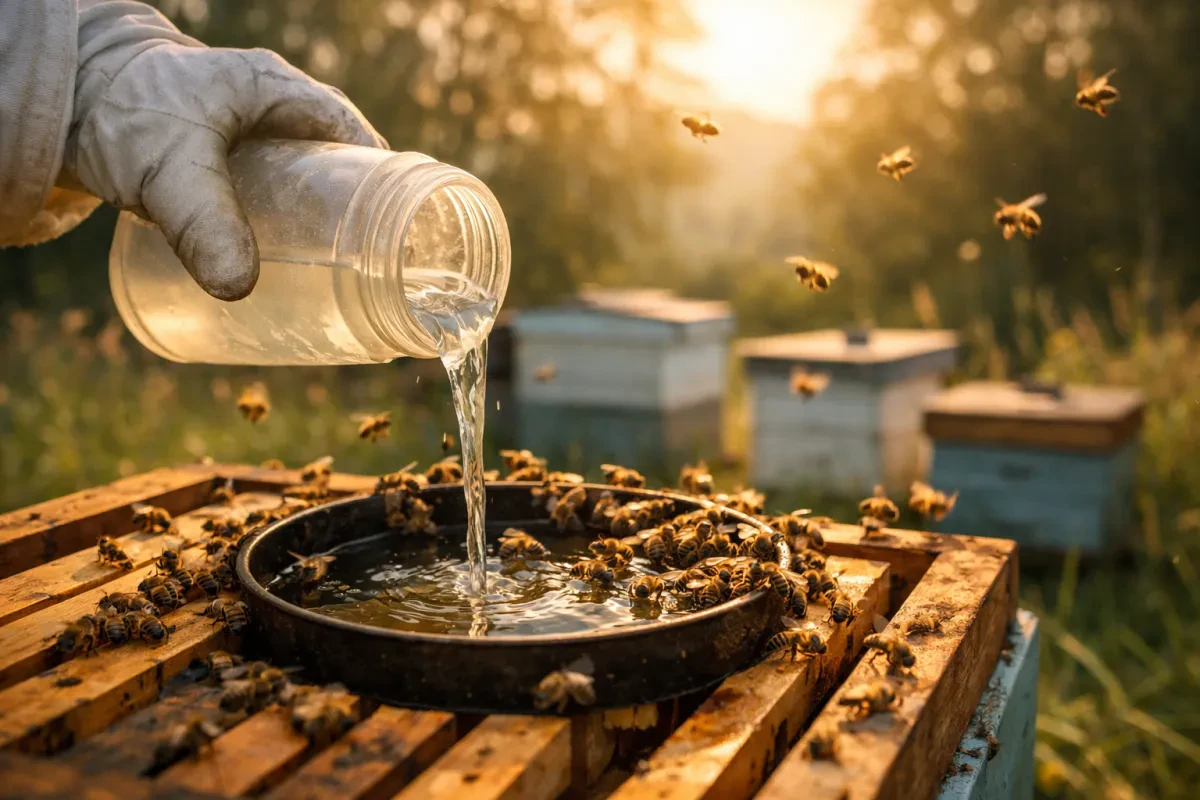
As the blooming season winds down, the bees will start to collect less nectar. You’ll want to keep an eye on the weather too. If temperatures drop consistently below 50°F (10°C), the bees won’t be as active, and feeding them can encourage their instincts to forage in cold weather. This can be harmful because they might not find enough resources outside the hive.
Another key factor in deciding when to stop feeding bees is honey production. If your bees have built up enough honey stores for winter, it’s time to stop their feeding. You can gauge this by checking how much honey is in their combs. If you see they’re well stocked, let them do their thing and focus on keeping the hive dry and ventilated.
Watch for signs of healthy behavior in your bees. When they’re busy preparing for winter by capping honey, that’s a good sign they’re ready to go on their own without the extra help from sugar syrup. Remember, less intervention can lead to stronger, more resilient bees that can sustain themselves through the colder months.
Signs Your Bees Are Ready
Knowing when to stop feeding bees is crucial for a healthy hive. You want your bees to be strong and thriving, not overly reliant on sugar syrup or other feeds. Watch for these signs that indicate your bees are ready to go without extra help:
1. Strong Foraging Activity: If you see bees buzzing around your garden and nearby flowers, that’s a great sign. They’re actively gathering nectar and pollen, which means they’re doing their job and finding their own food.
2. Full Honey Frames: When you check your hive, look for frames packed with honey. If most of the frames are filled and capped, they’re ready to eat what they’ve made. This is a big indicator that it’s time to think about when to stop feeding bees.
3. Healthy Brood Pattern: A well-fed queen will lay eggs consistently, and you’ll see a good pattern of brood. If the hive looks robust with lots of baby bees emerging, it’s a solid sign they don’t need supplemental feeding anymore.
Keep an eye on the weather too. Once temperatures warm up and flowers bloom, your bees will have plenty of natural food sources. Trust your instincts; the bees know what they’re doing!
Beekeeping for Beginners: Your Backyard Honey Guide
Unlock the secrets to successful beekeeping and enjoy fresh honey right from your backyard
Product information
£0.99
Product Review Score
4.25 out of 5 stars
23 reviewsProduct links
Seasonal Feeding Guidelines
Feeding your bees can be a great way to boost their health during tough seasons. But you might be wondering when to stop feeding bees. Timing is everything for keeping your hives happy and thriving. Let’s break it down by season.
In the spring, your bees are waking up and getting ready for a busy season. If you notice they're low on stores after winter, a little feed can help them kick things off. Once they’re foraging on flowers and have enough natural food, it’s time to back off. You don’t want to clog up the hive with too much sugar syrup when they have fresh pollen and nectar to enjoy.
Summer is where things get exciting! Your bees are in full swing. Usually, by mid-summer, they’ve built up a good amount of honey. If the flowers are plentiful, that means it’s time to stop feeding them altogether. If you keep feeding them, you might end up with too much sugar in your honey, and that’s a no-go for flavor and quality.
Then comes fall. As temperatures drop and flowers dwindle, it’s time to keep an eye on those honey stores again. If they’re running low and winter is approaching, feeding can help. But, once late fall hits and it’s really chilly, that’s definitely when to stop feeding bees. This way, they can cluster up and keep warm without relying on extra syrup.
Beekeeping Made Easy: Your Complete Guide
Discover simple tips and tricks to start your beekeeping journey with confidence
Product information
£3.56
Product Review Score
4.41 out of 5 stars
49 reviewsProduct links
Best Practices for Hive Health
Keeping your hive healthy is key to having thriving bees. One important aspect is knowing when to stop feeding bees. If you continue to feed them too late in the season, you can end up with problems like dysentery. Bees need to store their own food for the winter, so timing is everything.
A good practice is to monitor the weather and temperature. When temperatures consistently stay above 50°F, your bees start foraging on their own. Once they’ve gathered enough pollen and nectar, it’s time to taper off your feeding. Check your hive’s food stores—make sure they have enough to make it through the winter. If they do, it's time to let them do their thing.
Another crucial point is to watch for any signs of stress or disease. If your bees seem agitated or are clustering more than usual in the cooler months, you might need to reassess your feeding practices. Healthy bees are active and calm, so make sure they're in good shape before deciding when to stop feeding bees.
Finally, always keep your hive clean. Any leftovers from feeding can attract pests and disease. Make sure to clean up any spilled syrup or unconsumed food. This helps your bees stay healthy and ensures they aren't fighting off unwanted guests when they should be focusing on storing food for the winter.